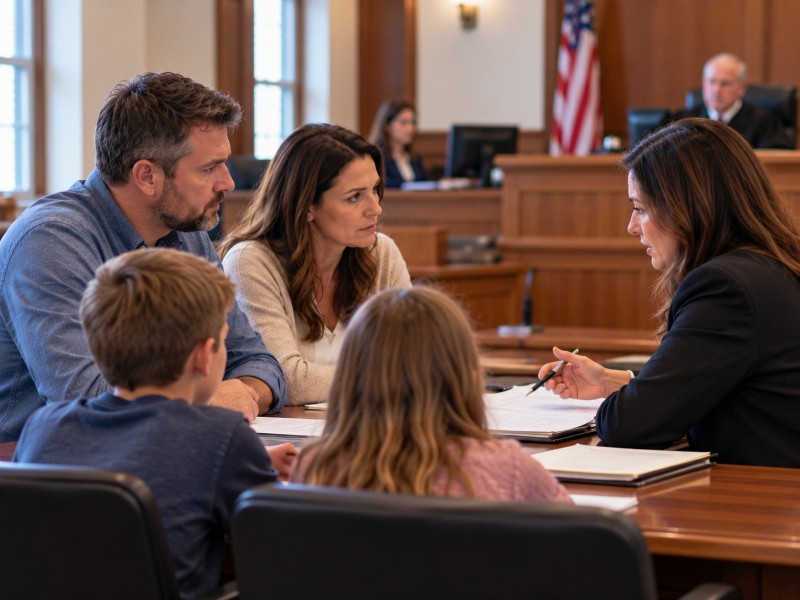
Ending a marriage is rarely simple, and knowing where to start can feel overwhelming. Understanding the Iowa divorce process gives you a clearer path forward, so you can focus on what matters most during this difficult time.
In Iowa, divorce is legally called a dissolution of marriage. The terminology matters because it is the phrase used on all official court documents and filings. Whether you have been married for two years or twenty, the basic steps follow the same legal framework under Iowa law.
At McGinn Law Firm, we work with people in Council Bluffs, IA, and the surrounding area who are navigating divorce proceedings. Having a clear picture of what is involved from the start makes every step easier to manage.
What Do You Need to File for Divorce in Iowa?
Before anything is filed with the court, some specific legal requirements and documents must be in order. Skipping this preparation phase often leads to delays later in the process.
Meeting Iowa’s Residency Requirement
The residency requirement is the starting point for any Iowa divorce. The person filing for divorce must have lived in Iowa for at least one year, unless the other person is a resident of Iowa and is personally served the dissolution of marriage papers. This rule applies regardless of where the marriage took place.
If you or your spouse recently moved to Iowa, the one-year clock runs from the date you established residency in the state. Filing before meeting it will result in the case being dismissed.
Gathering Your Divorce Paperwork Iowa Courts Require
Once residency is established, the next step is collecting the right documents. Having these ready before you visit the courthouse or speak with an attorney helps the process go more smoothly.
Common documents needed for divorce paperwork Iowa courts expect include:
- A certified copy of your marriage certificate
- Financial records, including tax returns, pay stubs, and bank statements
- Documentation of any real property, such as mortgage statements or deed records
- Records related to shared debts, including credit card statements and loan documents
- If children are involved, school records and any existing custody or support agreements
Some people are unsure whether they need all the documents before filing. In most cases, you do not need everything on day one, but the more complete your records are, the smoother the process tends to go.

Understanding Grounds for Divorce in Iowa
Iowa is a no-fault divorce state. That means neither spouse has to prove wrongdoing to file. The legal standard is simply that the marriage has broken down with no likelihood that it can be repaired.
This approach removes the need to argue about fault in most cases. It does not mean all issues are automatically resolved. Property division, child custody, and support are still negotiated or decided by the court. Still, the reason for the divorce itself does not need to be proven in a contested way.
How Do You Submit a Dissolution of Marriage Petition in Iowa?
Once your documents are gathered and residency is confirmed, the actual filing process begins. This step involves preparing and submitting the official dissolution-of-marriage petition to the appropriate Iowa court.
Filing in the Right Iowa District Court
Divorce cases in Iowa are filed in the Iowa district court in the county where either spouse currently lives. If you live in Pottawattamie County, for example, you would file at the Pottawattamie County District Court, which serves the Council Bluffs area.
It is important to file in the correct county. Filing in the wrong jurisdiction can result in delays or a transfer of your case. We help clients confirm the right court before any paperwork is submitted.
Completing and Submitting the Petition
The Dissolution of Marriage Petition is the core document in any Iowa divorce case. It outlines basic information about the marriage, identifies both spouses, and states what the filing spouse is requesting from the court.
The petition typically includes:
- Full legal names and addresses of both spouses
- Date and location of the marriage
- Names and ages of any children from the marriage
- A general statement that the marriage has broken down
- Requests regarding property division, custody, and support
Once completed, the petition is filed with the district court clerk. At that point, you will be asked to pay the divorce filing fee. This fee varies by county but is generally required before the court will accept the documents.
Serving the Other Spouse
After filing, the other spouse must be formally notified. This step is called service of process. Iowa law requires that the responding spouse receive a copy of the petition along with a summons from the court.
Service can be completed through the county sheriff’s office, a private process server, or by the other spouse voluntarily signing an acceptance of service. Once service is confirmed, the responding spouse has a set period of time to respond to the petition.
What Happens After You File Your Iowa Divorce Petition?
Filing the petition is the beginning, not the end. Several important steps follow, and the length of the process depends on whether the divorce is contested or uncontested.
The Waiting Period and Initial Response
Iowa requires a 90-day waiting period after the petition is filed and served before a divorce can be finalized. This waiting period is built into the law and applies to virtually all cases. It is not a penalty. It is simply a required pause before the court can enter a final decree.
During this time, the responding spouse may file an answer with the court. If both parties agree on all major issues, the process can move toward a final hearing relatively smoothly. If there are disputes, the case may require additional hearings or mediation.
Negotiating Key Issues
Most divorces in Iowa are resolved through negotiation rather than a full trial. The major issues that need to be resolved include:
- Property division: Iowa uses an equitable distribution standard, meaning assets are divided fairly but not necessarily equally.
- Child custody and visitation: Courts prioritize the child’s best interests in all custody decisions.
- Spousal support, also called alimony, is not automatic and depends on the circumstances of each case.
- Child support: Calculated using Iowa’s income shares model, which considers both parents’ earnings.
Working through these issues with clear documentation and a good-faith effort to negotiate often leads to better outcomes for everyone involved.
Final Hearing and Decree of Dissolution
Once all issues are resolved and the waiting period has passed, the court schedules a final hearing. At this hearing, a judge reviews the proposed agreement and, if everything is in order, signs the decree of dissolution. That document legally ends the marriage.
If the case is uncontested and both parties agree, the final hearing is typically brief. Contested cases may require more time before reaching this stage. We guide our clients through each step so they understand what to expect before walking into any courtroom.
Understanding the full Iowa divorce process from start to finish helps you approach each phase with confidence rather than uncertainty. At McGginn Law Firm, we believe that informed clients are better equipped to make decisions that protect their interests and their families.
Frequently Asked Questions
How long does the Iowa divorce process take in Iowa?
Every case moves through the legal system at its own pace depending on the specific details involved. Iowa requires a minimum 90-day waiting period after filing, but contested cases involving disputes over property, custody, or support often take longer to resolve fully.
What is the divorce filing fee in Iowa?
The divorce filing fee varies by county and is set by each Iowa district court. Fees are paid when the dissolution of marriage petition is submitted to the court clerk. We can help you understand the expected costs in your specific county before you file.
Do both spouses have to agree for a divorce to happen in Iowa?
A divorce can proceed in Iowa even if only one spouse wants it. Because Iowa is a no-fault state, one spouse does not need the other’s permission to file a dissolution of marriage petition. The court will still review the case and address property division, custody, and support before finalizing the decree, even if the other spouse does not respond.