
When you are facing a family legal matter, walking into a courthouse for the first time can feel overwhelming. Knowing what to expect from the Iowa family court process and having us as your family lawyer can make a meaningful difference in how prepared and confident you feel throughout the process.
Family court handles some of the most complex personal decisions a judge will ever make, including where children live, how finances are divided, and what parenting arrangements look like going forward. Understanding how these courts are organized, how hearings work, and what the general timeline looks like helps you approach your situation with a clearer head.
How Is Pottawattamie County Family Court Organized?
Iowa operates a unified court system, in which all courts in the state fall under a single structure overseen by the Iowa Supreme Court. Family law cases in Council Bluffs are handled at the district court level, specifically within the Iowa District Court for Pottawattamie County.
Where Cases Are Filed
Family law matters, including divorce, child custody, child support and parentage are filed at the Pottawattamie County courthouse. The Pottawattamie County court clerk manages document intake, assigns case numbers, and maintains all official court records. Filing must follow specific procedural requirements, and even small errors in paperwork can create delays.
When you file, the clerk’s office will provide a case number and set the matter into motion. Certain documents must be served on the other party within a set window, which is why understanding legal filing deadlines is critical from day one.
Who Presides Over Family Law Cases
A family law judge assigned to Pottawattamie County hears these matters. Iowa does not have a dedicated family court building separate from the district court. Instead, family law cases are scheduled within the district court’s docket alongside other civil matters.
The judge has broad authority to issue temporary orders early in the case. These orders can cover custody arrangements, use of the family home, and temporary support while the case is still pending. They are legally binding and should be taken seriously from the moment they are issued.
The Role of the Court Clerk
The clerk’s office is often the first point of contact when a case begins. They record every filing, stamp documents with official dates, and send notices about upcoming hearings. Keeping track of everything the clerk processes is an important part of staying organized during a case. Missing a notice or failing to respond to a filing in time can have real consequences.
What Happens at a Family Law Hearing in Iowa?
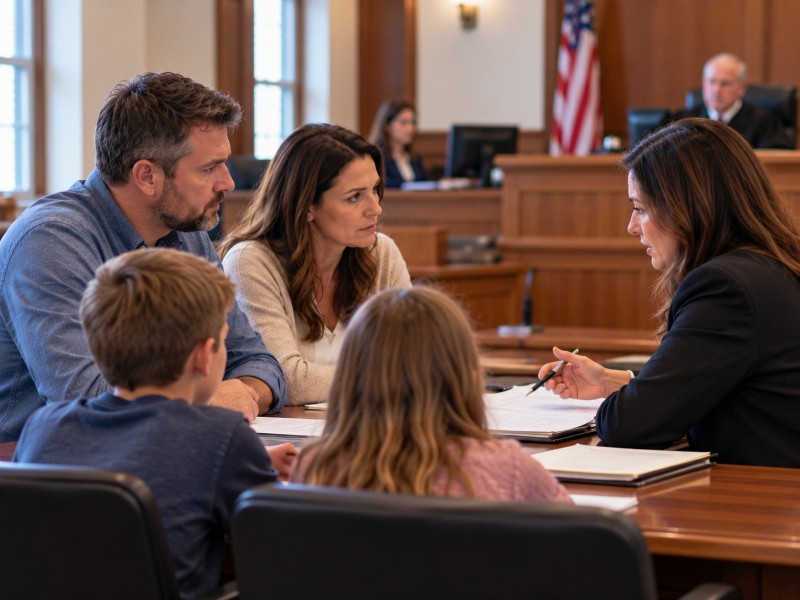
Family law hearings in Iowa can take several forms depending on where a case is in the process. Some are short and focused on temporary matters, while others involve a full presentation of evidence. Court hearing preparation is important to do before any scheduled date.
Types of Hearings You May Encounter
There are several common hearing types in a family law case:
- Temporary orders hearings occur early in the case to establish ground rules while the matter is being resolved.
- Pre-trial conferences allow both sides and the judge to clarify issues, narrow disputes, and set a schedule.
- Contested hearings happen when parties cannot agree and need the judge to decide one or more issues.
- Modification hearings take place after a final order is entered, if someone wants to change a prior ruling.
Each type of hearing has its own expectations and procedural rules. What you say, what documents you bring, and how you present yourself all carry weight.
What the Judge Looks For
In custody and support matters, the family law judge applies standards set by Iowa law. For custody, judges consider which arrangement best serves the child’s best interests. Factors include each parent’s relationship with the child, the child’s adjustment to home and school, and each parent’s ability to support a healthy relationship with the other parent.
For financial matters like property division or spousal support, the judge considers the length of the marriage, each party’s financial situation, and contributions made during the marriage. These are fact-intensive decisions, and presenting your situation clearly and accurately matters.
Preparing for What Comes Next
Walking into a hearing without understanding what will be asked or what documents you need is a common mistake. We work with clients to organize their financial records, parenting information, and any other relevant materials before each hearing. Knowing what to expect in that courtroom helps reduce anxiety and supports a more focused presentation of the facts.
How Long Does a Typical Family Law Case Take in Council Bluffs?
The timeline for a family law case depends on several factors, including whether the parties agree on the issues, how complex the financial situation is, and how backed up the court’s schedule is. There is no single answer that applies to every situation, and it would be misleading to suggest otherwise.
Uncontested vs. Contested Cases
An uncontested case, where both parties agree on all major issues, moves through the system more efficiently than one where issues are in dispute. In Iowa, there is a mandatory waiting period in divorce cases before a decree can be entered. This period gives both parties time to consider the decision and work toward a full resolution.
A contested case takes longer because it requires additional hearings, more extensive document exchange, and sometimes the involvement of outside professionals such as financial or parenting evaluators. The more issues remain unresolved between the parties, the longer the process will typically take.
What Can Affect the Timeline
Several factors can extend how long a case takes:
- Difficulty serving the other party with legal documents
- Disputes over financial disclosures or hidden assets
- Custody disagreements that require evaluation or mediation
- Court scheduling backlogs in Pottawattamie County
- Requests for continuances or additional hearings
On the other hand, when both parties work cooperatively and respond to filings promptly, cases can move through the system without unnecessary delays.
What Local Experience Adds
Understanding how Pottawattamie County schedules hearings, what the local court prefers regarding documentation, and how to communicate effectively with the clerk’s office comes with experience. We have worked within this court system for many years and understand the practical realities that affect how a case moves. That local knowledge matters when navigating something as important as your family’s future.
At McGginn Law Firm, we understand the local court environment, which means fewer surprises at critical moments in your case.
Frequently Asked Questions
How do I start a family law case in Pottawattamie County?
A case begins with filing the appropriate petition with the Pottawattamie County court clerk. The clerk assigns a case number, and the other party must be formally served with the documents. From there, the court will begin scheduling hearings based on the issues involved.
What should I bring to a family law hearing in Iowa?
Bringing organized documentation is essential. Depending on the type of hearing, this may include financial records, parenting schedules, communications, tax returns, or employment information. We work with clients ahead of each hearing to make sure nothing important is overlooked.
Can a divorce case in Council Bluffs be settled without going to trial?
Many family law cases are resolved through negotiation or mediation before they ever reach a contested trial. When both parties are willing to engage in good-faith discussions, a settlement can be reached that reflects both sides’ priorities. A trial becomes necessary only when key issues remain unresolved after those efforts.