When you’re dealing with the aftermath of a crash, knowing what to collect and preserve can make a real difference in the strength of your case. As a car accident lawyer in Council Bluffs, we understand how confusing those first hours and days can feel, and how quickly critical evidence can disappear.
Iowa follows a fault-based system for car accident claims. That means the person responsible for causing the crash is generally responsible for covering the resulting damages. To recover compensation, you need to show that the other driver was at fault and that their negligence caused your injuries. Strong, well-preserved evidence is how that story gets told.
What Evidence Matters Most for a Car Accident Claim in Iowa?
Not all evidence carries the same weight. Some types of documentation go directly to the question of fault. Others help establish the full extent of your injuries and property damage. Knowing the difference helps you focus your energy in the right places. If you’re at all unsure of what you need to do, please contact one of our personal injury lawyers regarding your claim.
The Police Report
Always call law enforcement to the scene, even if the crash seems minor. The responding officer will create an official accident report that documents the date, time, location, and their initial assessment of what happened. This report often includes citations issued and statements from both drivers. Insurance companies and courts treat police reports as important baseline documents, so getting the report number and requesting a copy as soon as it becomes available is worth the effort.
Medical Records and Documentation
Seeking medical attention right away serves two purposes. First, it protects your health. Second, it creates a documented link between the crash and your injuries. If you wait days before seeing a doctor, the other side may argue that something else caused your condition. Every visit, diagnosis, prescription, and treatment note becomes part of the record that supports your claim. Keep copies of everything.
Dashcam Footage and Surveillance Video
Dashcam footage can be one of the most powerful forms of evidence in a car accident case. If your vehicle has a dashcam, preserve that recording immediately. Do not allow it to be overwritten. Beyond your own camera, nearby businesses, traffic signals, and parking lots may have surveillance systems that captured the crash. This kind of video evidence is time-sensitive because many systems overwrite recordings within days. Acting quickly matters.
How Can Photos and Witness Statements Help Your Case?
Visual evidence and firsthand accounts from bystanders can fill in details that no other record captures. Together, they help paint a clear picture of what happened at the scene.
Taking Effective Vehicle Damage Photos
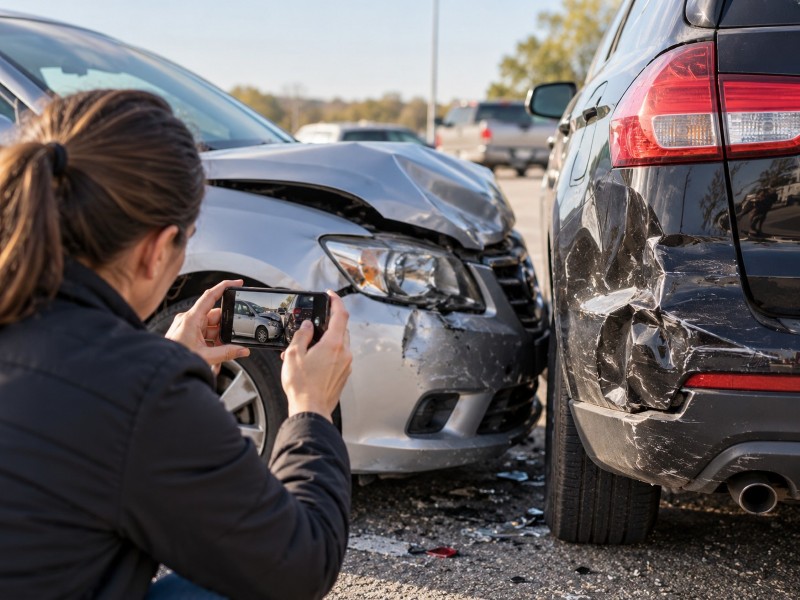
Vehicle damage photos should be taken from multiple angles. Wide shots that show both vehicles relative to each other and to the surrounding road help establish context. Close-up shots document the specific points of impact. Photograph the license plates of all vehicles involved. If there is debris on the road, skid marks, broken glass or damaged guardrails, photograph those too. These details can support accident reconstruction analysis later, which experts use to determine vehicle speed, direction, and the sequence of events.
If you are physically able to do so at the scene, take photos before any vehicles are moved. Once a crash scene is cleared, that evidence is gone.
Getting Eyewitness Contact Information
Eyewitnesses are often overlooked in the chaos after a crash. A bystander who saw the other driver run a red light or swerve across lanes can provide testimony that no document can replicate. Collect eyewitness contact information from anyone who stopped or was nearby. Full name, phone number, and a brief note on what they observed are enough to get started. We can follow up with witnesses to gather formal statements as part of building your case.
Photographing the Scene and Road Conditions
Beyond the vehicles themselves, the surrounding environment often tells part of the story. Poor road conditions, missing signage, faded lane markings, or obstructed sightlines at an intersection can all be relevant to how a crash occurred. Photograph the road surface, any traffic signals, and the broader area of the crash site. Weather and lighting conditions at the time of the crash are also worth noting. If it was raining, foggy or dark, document that as well.
What Should You Save After a Car Accident to Support Your Claim?
Evidence gathering does not end at the scene. The days and weeks that follow are full of documents and communications that can either support or complicate your claim. Knowing what to save protects you throughout the process.
Keep a Personal Injury Journal
Starting a written log of how your injuries are affecting daily life can be surprisingly valuable. Note your pain levels, movement limitations, sleep disruptions, missed work, and anything else the injuries have changed. This kind of record helps demonstrate non-economic damages, such as pain and suffering, in a way that medical records alone cannot. Write entries regularly and keep the log somewhere safe.
Save All Bills, Receipts, and Financial Records
Property damage repairs, medical bills, prescription costs, transportation to appointments, and lost wages all represent real financial harm. Save every bill, receipt, and statement connected to the crash. If your injuries require you to miss work, gather pay stubs or other documentation of your normal income. These records form the economic backbone of your claim and help establish the true cost of what happened.
Preserve All Communications About the Accident
This includes text messages, emails, and any written communication from the other driver, witnesses, or insurance companies. Be cautious about what you say in written form. Insurance adjusters may use statements out of context, even when those statements seem harmless. Avoid posting about the crash or your injuries on social media. Opposing parties can and do review social media during the claims process.
Frequently Asked Questions
What is the most important evidence to collect right after a car accident?
The most important steps are calling law enforcement, seeking immediate medical attention, and photographing the scene before anything is moved. Collecting eyewitness contact information and preserving any dashcam footage are also critical priorities. The sooner these steps happen, the more complete your evidence will be.